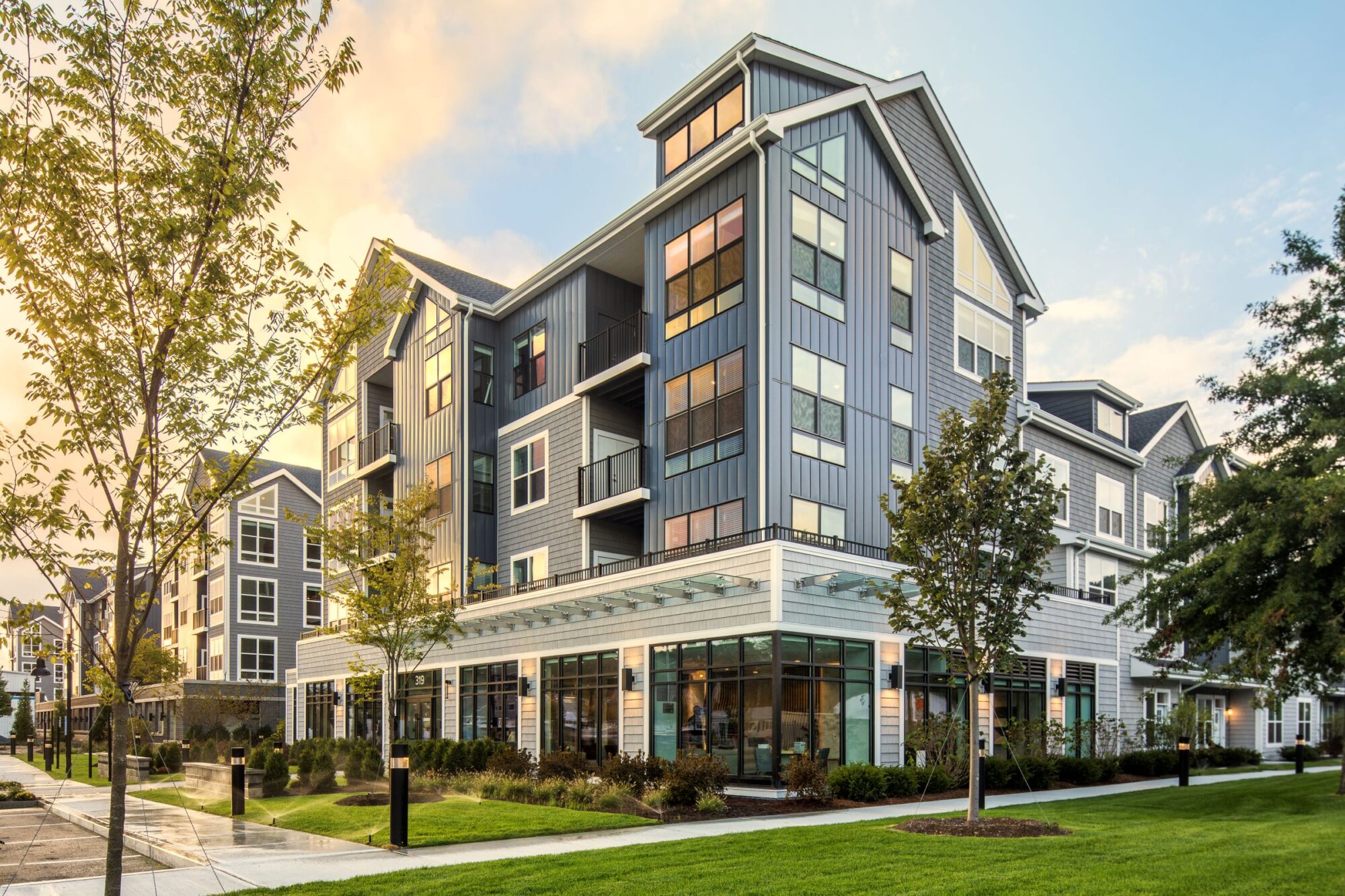
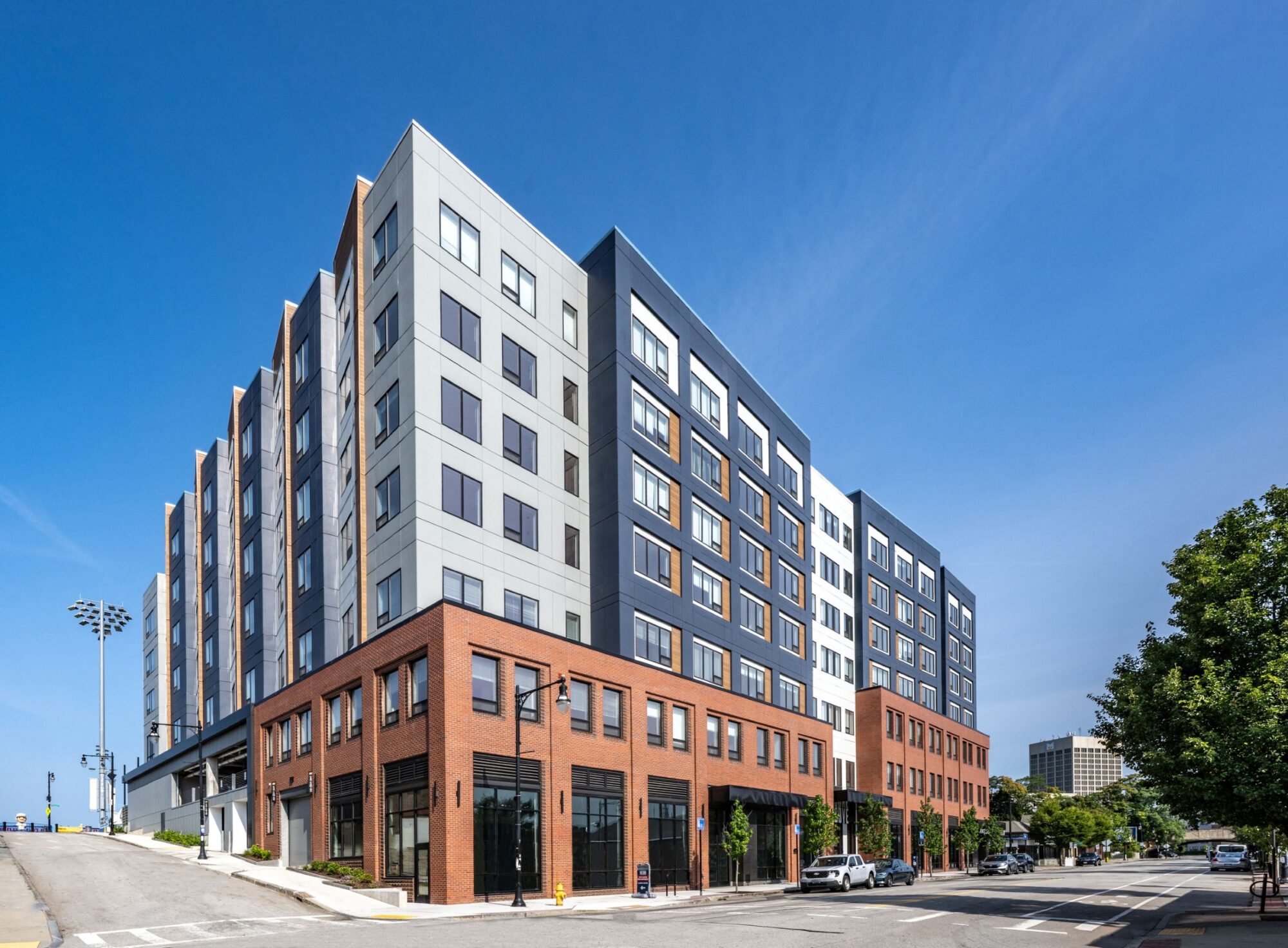
The 30-acre masterplan includes LEED-certified buildings with upgraded affordable homes and over 2,000 new middle-income and market-rate units, along with 69,000 square feet of community and retail space and 2.3 acres of open space.
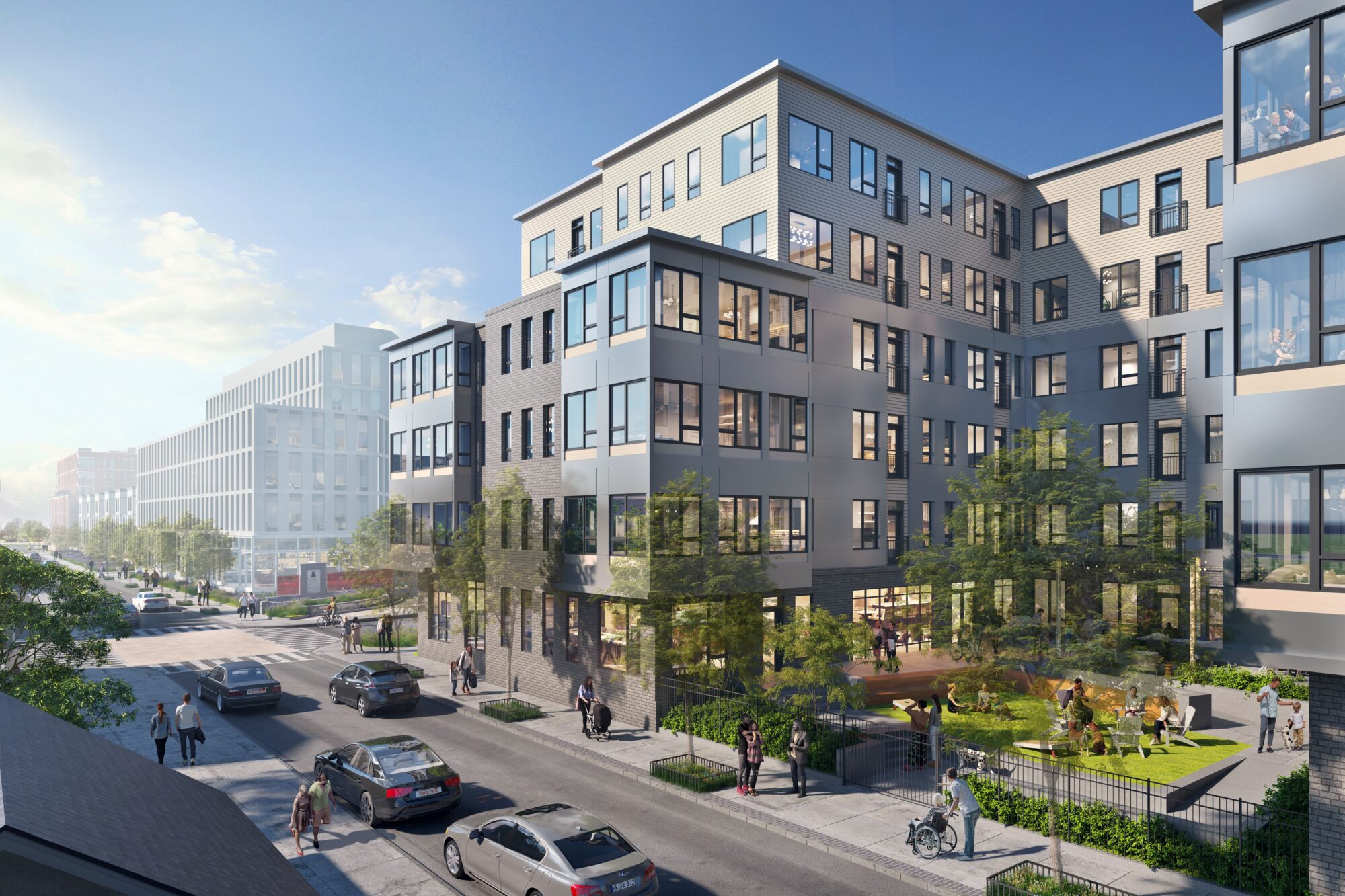
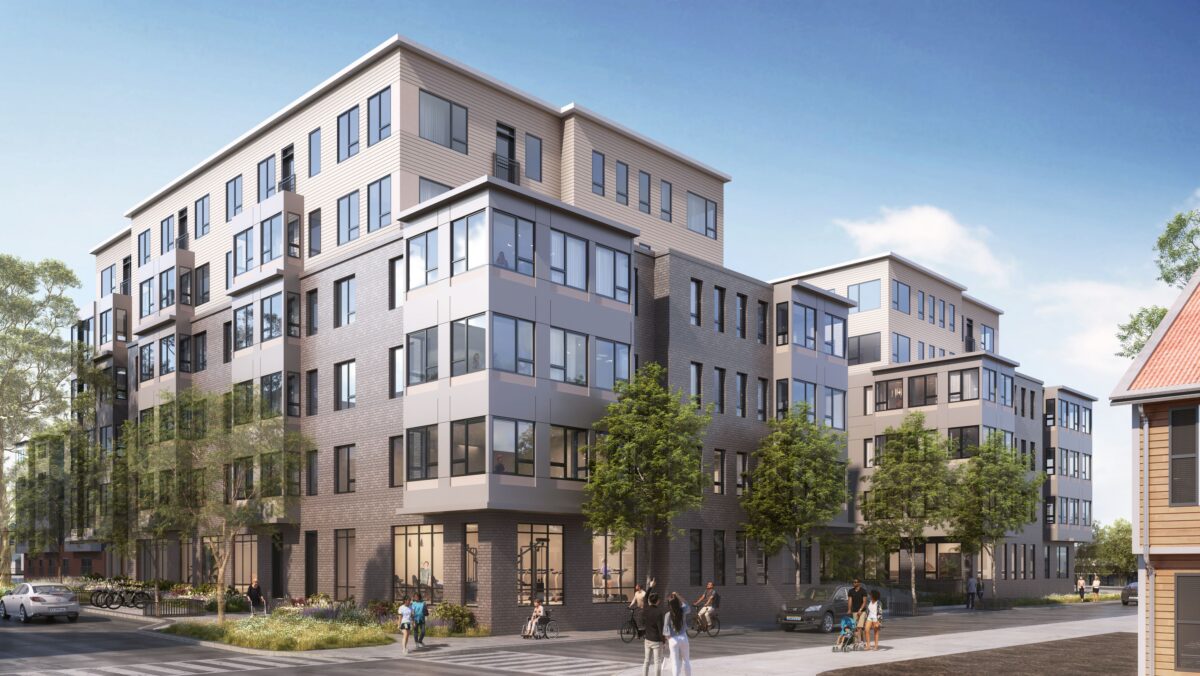
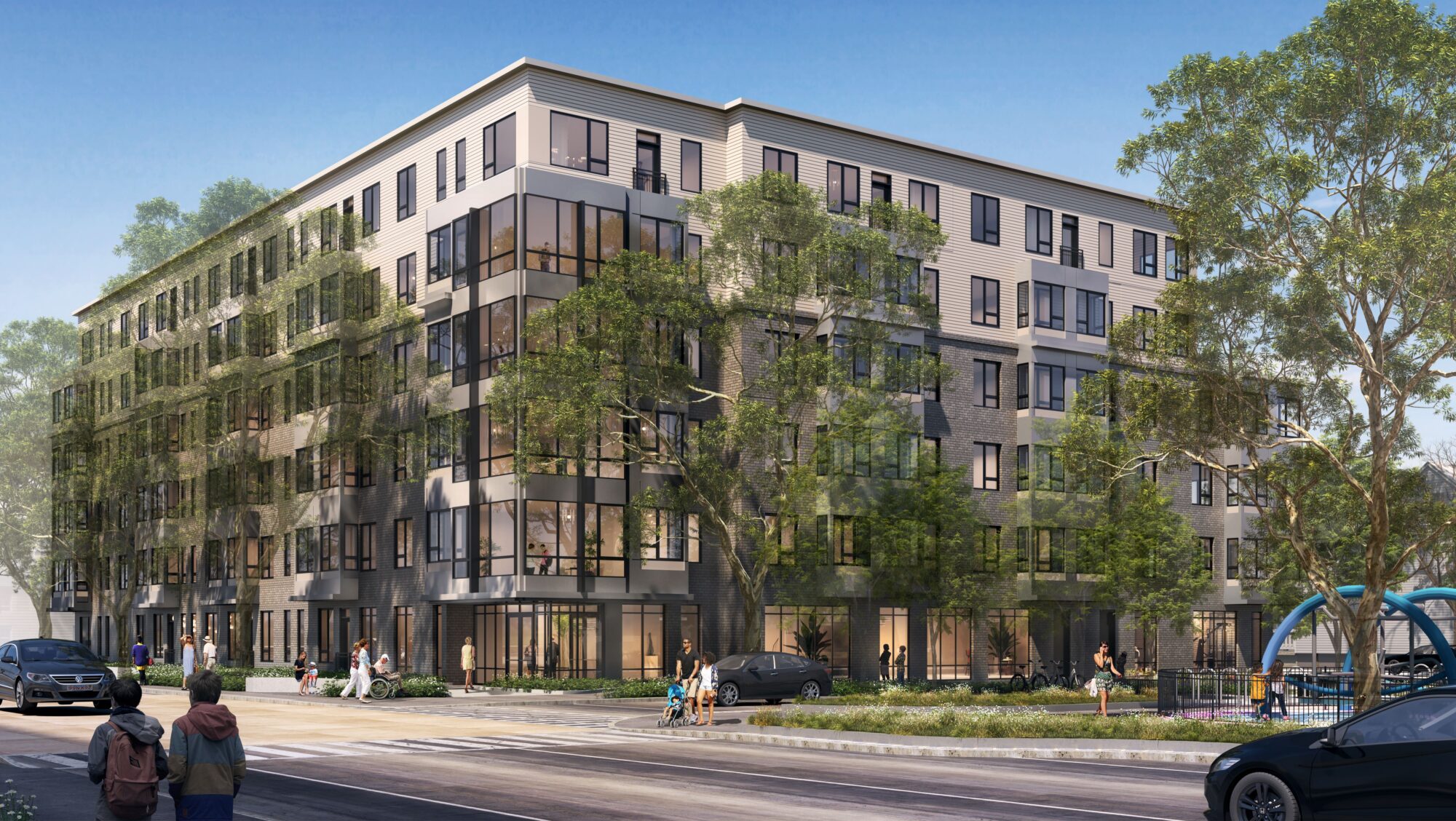
Targeting Passive House certification, the all-electric Building A incorporates a geothermal heating and cooling system and features a U-shaped form with a central courtyard with grilling areas, amphitheater seating, and grassed areas. Situated just feet from the Andrew Square MBTA Red Line station, the building’s four-to-six-story massing responds to the surrounding neighborhood context, while a mix of brick, fiber cement siding, and aluminum panels adds visual rhythm and warmth. Large corner windows frame spectacular views to the surrounding community and the downtown Boston skyline. Where possible, healthy street trees lining the site have been preserved, with many originally planted when the community was first established in the 1930s.
With an eye toward the future, the building elevation was raised more than five feet above existing grade, designed to exceed the 2070 flooding scenario projected by Climate Ready Boston. The base of the building is carefully sculpted to meld with the new grades, softening the apparent height while ensuring long-term resilience.
Beyond the $62 million building itself, Building A is accompanied by $8 million in public infrastructure improvements that extend its impact into the broader neighborhood. These include a new Veterans Park with an accessible tot lot and splash pad, a two-way separated bike lane, reconfigured streets and intersections with pedestrian enhancements, and new street trees and planting areas.
Thoughtful amenities, including a community room, fitness center, workspaces, media room, and children’s playroom, promote comfort and connection for residents. The interiors strike a balance between traditional warmth and contemporary design, layering vibrant colored tile and patterned wallcovering against a neutral base palette. Biophilic elements such as\ interior plants and custom wood furniture fabricated from trees salvaged from the project site ground the spaces in the community’s history and natural surroundings. TAT engaged with members of the Mary Ellen McCormack Task Force throughout the design process to ensure the palette and concept reflect the identity and aspirations of residents. A custom mural created in partnership with Artists for Humanity celebrates the active life and local landmarks of the surrounding South Boston neighborhood.