When Affordable Housing Becomes A Community Investment
Nonprofits, healthcare systems, schools, and foundations are putting new resources into housing—and giving architects more room to design projects that serve entire communities.
By Patrick Sisson
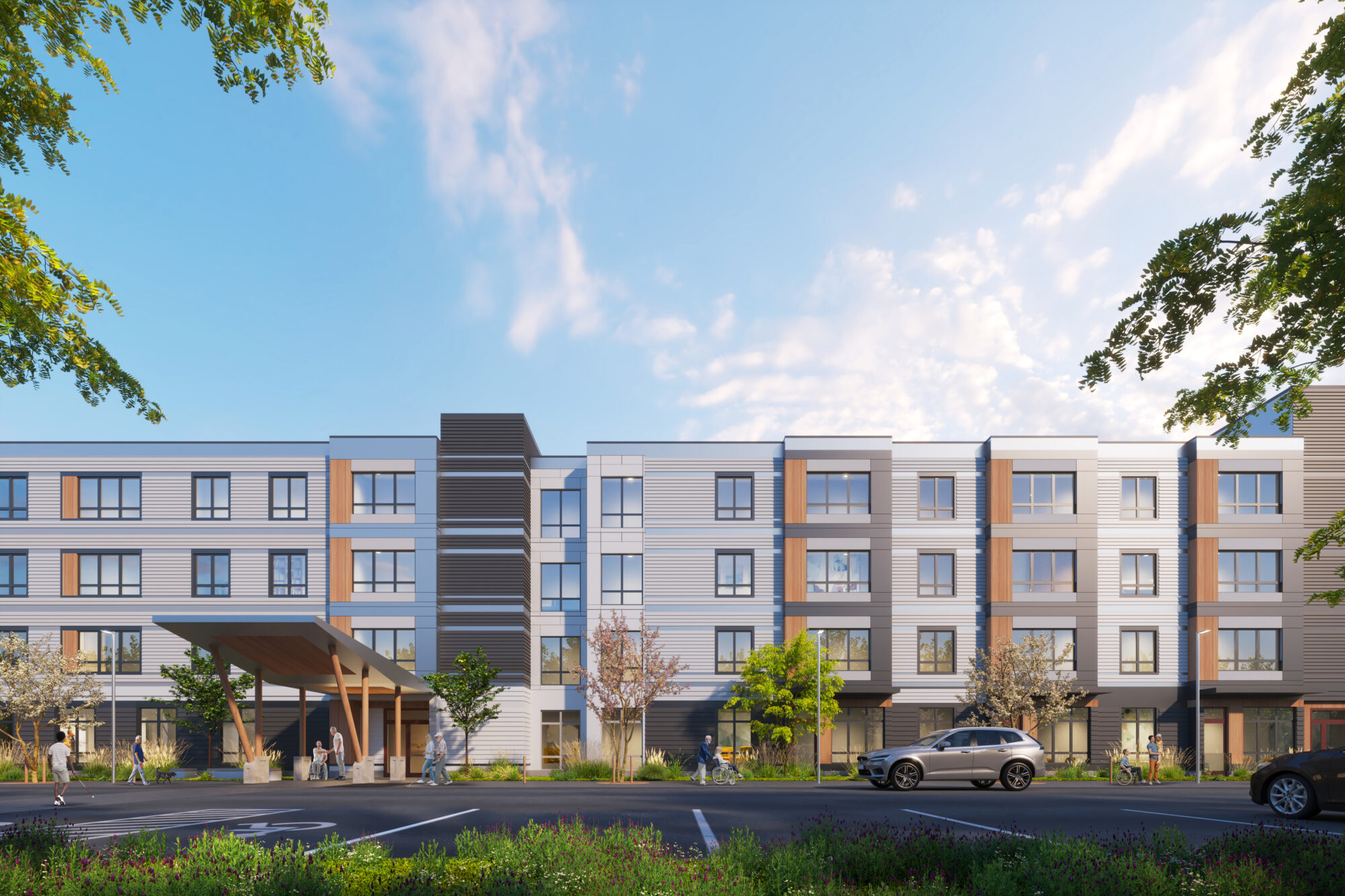
Incorporating these different design philosophies–focusing on specific communities while including space for anchor institutions–also helps projects draw in more sources of government and philanthropic funding. In Scarborough, Maine, the 51-unit Sturgeon Place apartment development, designed by Boston-based firm The Architectural Team, is working with a disability-focused nonprofit, 3i Housing of Maine, to create a 100% accessible building at the site of a former race track. It will feature assistive features such as adaptive environmental controls, a designated workspace for service providers, and a mobility and assistive technology hub.
Principal Gary Kane, AIA, said it has been enlightening working with a group so committed to universal design principles and encouraging to see how a project like this can help attract more funding sources. “You’re trying to give state agencies a reason to fund the project,” said Kane. “There’s really an unending supply of projects out there, and states are always looking to diversify.”
Affordable housing, in all its diversity, gives nonprofits an opportunity to pursue and promote their specific causes while making an impact on the nation’s housing crisis. As more nonprofits devote more effort and funding to these projects, it adds more opportunities for architects to get involved in community-oriented projects.
Read the article in AIArchitect