
The Hidden Risks Behind Office-to-Residential Conversions
Multi-Housing News spoke with TAT Principal Gary Kane about how, as changing a building’s original purpose becomes more common, so do the challenges and limitations that come with it.
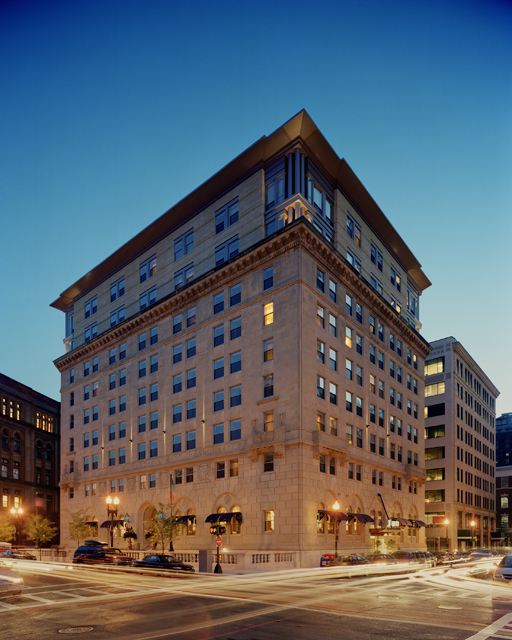
The former Boston Police Headquarters in Back Bay was converted by The Architectural Team into the 225-key Jurys Boston Hotel. The adaptive-reuse project also added two floors and an 11-story horizontal addition. Image by Bruce Martin
By Beata Lorincz
Office-to-residential conversions are accelerating as cities and developers look for ways to reposition underused commercial properties. Offices accounted for 47 percent of all apartments planned through adaptive-reuse nationwide.
But the near-collapse of a Manhattan office tower undergoing conversion this summer demonstrated how much can go wrong when a project encounters structural conditions—or pursues additions—that an existing building may not be able to accommodate. The incident brought renewed attention to the technical risks involved in transforming existing office towers into housing.
Gary Kane, principal at The Architectural Team, said the condition and alteration history of an existing building often present greater risks than the change of use itself. Residential live and dead loads are generally lower than those associated with many prior uses, he noted, meaning the structure may not be the most difficult part of a conversion. Understanding that structure, however, can require considerable detective work.
“The process is akin to an archaeological investigation,” Kane noted.
Continue reading the article in Multi-Housing News.