Metamorphosis Awards| Historic Preservation Meets
Modern Sustainability
Stone Mill Lofts Takes Second Place in Adaptive Reuse Category
Originally published by Retrofit Magazine
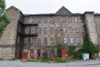
In the former mill city of Lawrence, Mass., 30 miles north of Boston, a nearly 200-year-old industrial landmark has been reimagined as Stone Mill Lofts, an all-electric, mixed-income apartment community that sets a new standard for sustainable historic preservation and adaptive reuse. The transformation of the 149,220-square-foot former Essex Company Machine Shop into 86 apartments merges deep-energy retrofitting with meticulous preservation.
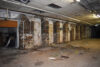
Built in 1845, the shop was the first building to be constructed along Lawrence’s canal and manufactured parts for textile mills, playing a vital role in powering the textile industry during the height of the Industrial Revolution. Although the building is listed on the National Register of Historic Places, like many mills throughout New England, it had fallen into disrepair before being selected as a key revitalization site under the city’s 20-year urban renewal plan. Community engagement shaped the plan’s priorities: preserving Lawrence’s historic buildings and promoting sustainable development. Stone Mill Lofts addresses both these ideals.
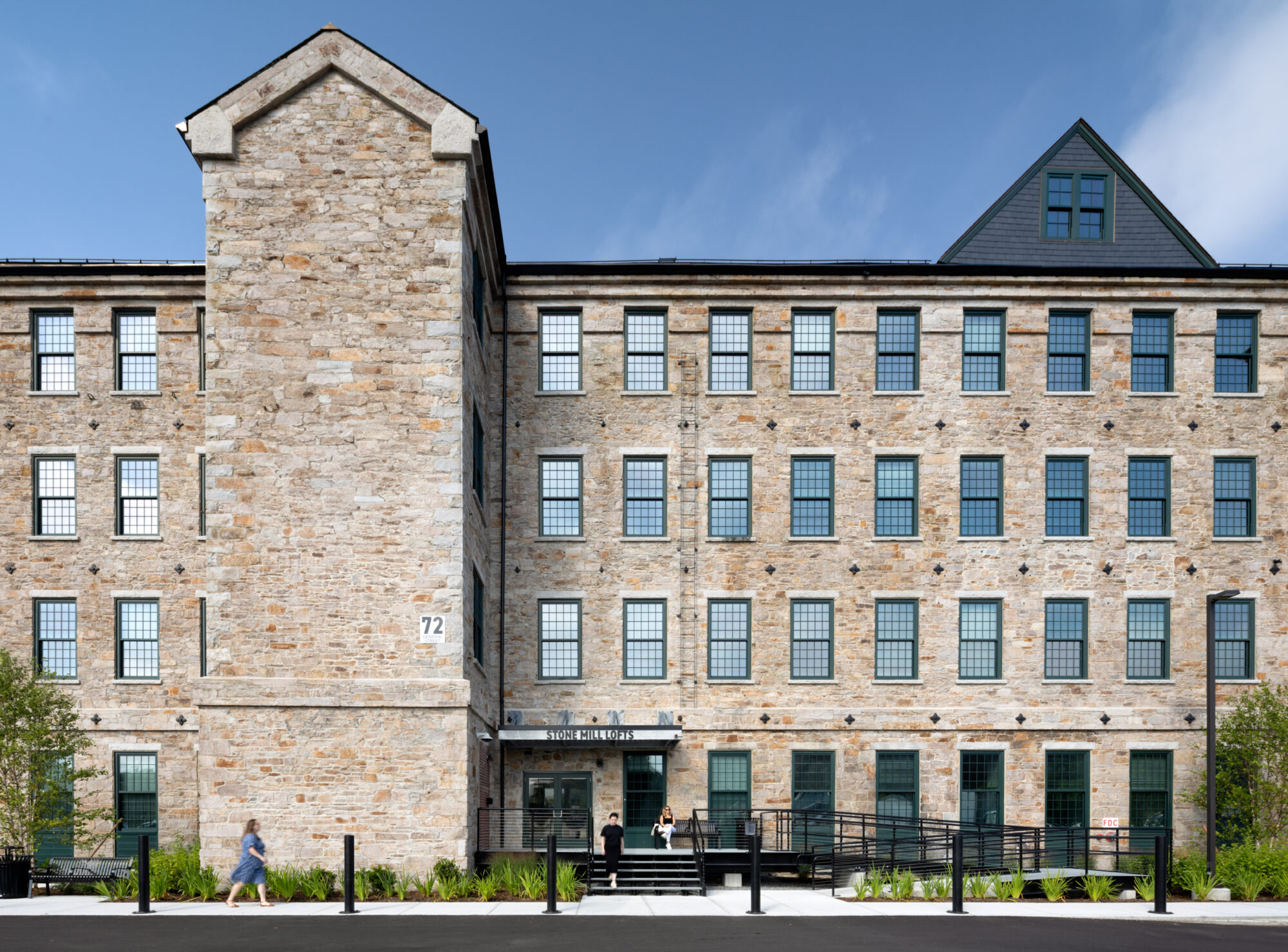
Stone Mill Lofts is the first all-electric, combustion-free, historic adaptive-reuse multifamily project in Massachusetts.
In 2021, the project launched amid renewed urgency for fossil-fuel-free housing, following a 2018 gas explosion in the Merrimack Valley. This incident spurred the creation of the Merrimack Valley Renewal Fund, which helped pilot electrification-focused projects. Stone Mill Lofts became the first large-scale development supported by the fund’s Building Excellence Grant Program.
Thoughtful Design and Energy Innovation
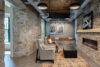
The building’s original character remains central to the design. Exposed wood beam ceilings, whitewashed shiplap, and ochre-colored fieldstone walls were restored and incorporated throughout common spaces and apartments. Large windows bring in natural light, and new layouts feature open-concept kitchens with Euro-style cabinetry, white stonelike countertops and ENERGY STAR-rated appliances.
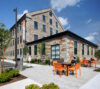
Inside, residents enjoy modern amenities, including a lounge with a catering kitchen and billiards room, co-working pods, a children’s playroom, fitness center, shared laundry, indoor bike parking and secure package rooms. Outdoors, a terrace with seating promotes community and relaxation while the location gives residents walkable access to MBTA Commuter Rail stations, eclectic dining and shopping, and the Spicket River Greenway—a 3.5-mile urban trail that connects neighborhoods along the revitalized riverfront. The site also includes 160 parking spaces and EV charging stations.
In addition to historic preservation, energy performance was a core goal. The project uses no fossil fuels, instead relying on high-efficiency heat pumps, a dedicated outdoor air system and energy-recovery ventilators, leading to improved indoor air quality and reduced costs. Stone Mill Lofts consumes 46 percent less energy and emits 33 percent fewer greenhouse gases than a typical gas-powered multifamily building, avoiding approximately 177 metric tons of carbon emissions annually.
The thermal envelope was upgraded with closed-cell foam insulation, adding an impressive overall R-Value of R-22, and more than 400 original windows were replaced with double-hung, triple-glazed, low-emissivity
replicas that meet strict historic and energy standards. These energy improvements allowed for right-sizing of HVAC equipment and lower utility loads, proving Passive House level performance is possible even in historic
structures.
This project takes the somewhat ubiquitous industrial-to-residential adaptive reuse to another level with its high retention of existing/original materials and full electrification.
Andrew C. Smith, AIA, Principal, Hennebery Eddy Architects | Metamorphosis Awards Judge
Engineering Solutions and Preservation Challenges
Historic preservation guidelines posed unique challenges. The building’s exposed stone walls were retained in common areas while insulated furring walls were added elsewhere to meet performance standards. A specialized framing system with 1-inch offset wood studs was chosen to reduce thermal bridging.
The original fieldstone façade was cleaned and repaired while mortar joints were repointed to prevent water infiltration. The roof’s slope and limited mechanical space led to a creative solution: Equipment was housed in below-grade areaways. Locally sourced slate tiles match the original roofing.
Another major hurdle was compliance with updated FEMA flood-elevation standards. The ground-floor slab was raised 12 inches, requiring new groundwork and a reinforced concrete slab to protect the building’s sensitive waterfront location.
A Living Piece of History
Nearly two centuries after the Essex Company Machine Shop was built, its conversion into Stone Mill Lofts marks a significant milestone: the first all-electric, combustion-free, historic adaptive-reuse multifamily project in Massachusetts.
Stone Mill Lofts is more than a housing development; it’s a model for how thoughtful, sustainable design can preserve cultural heritage, address climate goals and help revitalize cities. It’s a place where the past and future live side-by-side, offering residents a safe, efficient and beautiful home in a city on the rise.