
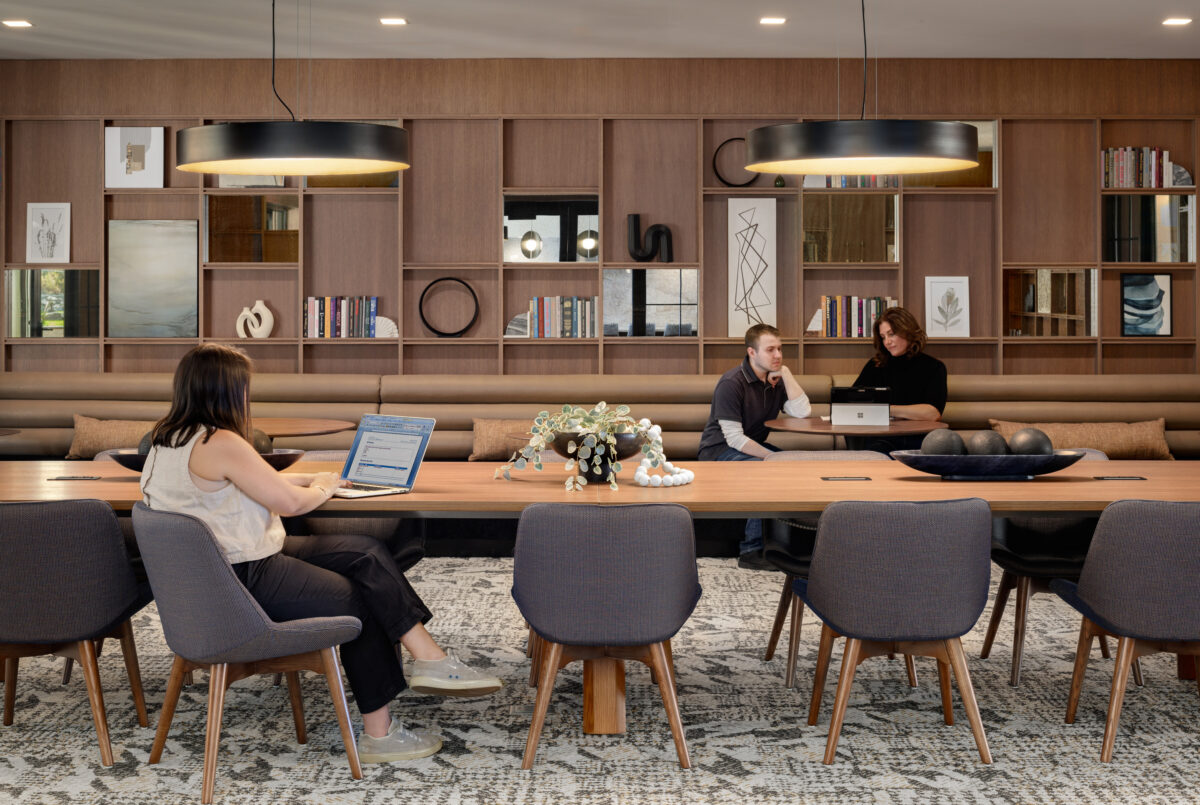
Luxurious Living
More developers are using luxury features, materials, systems, and services to set their properties apart, but as they become more widespread, the search ramps up for even more luxurious communities.
By Barbara Ballinger, Contributor, UNITS Magazine
“Luxury.” The word conjures up different images depending on who is asked—a mound of caviar and Champagne as part of a gourmet meal or expensive bottle of wine; the softest cashmere throw or sweater; or a vacation at a top-tier, posh hotel, perhaps one in a hit TV show.
At apartment communities, other images come to mind for what luxury means and how it differentiates luxurious experiences—highly recognized brands, stainless steel appliances with all the bells and whistles, natural light with new windows, air filtration systems and high ceilings, curated experiences and concierge services and access to an area’s most popular attractions such as restaurants, sporting venues and other nightlife.
Though there are myriad differences according to market, demographic and budget, a common denominator is that the bar keeps being raised as luxury becomes more commonplace.
What’s needed for a property to retain its luxe status are enough wows that spark a higher level of comfort, quality, service or beauty, says designer Mary Cook, who leads the commercial design firm, Mary Cook Associates. “Most developers today are fighting to make sure every dollar spent on finishes, furnishings, amenities and services delivers the maximum impact,” she says. Or as developer Jeff Klotz, founder of The Klotz Group of Companies, explains, “We try to out-luxe our competitors and chase the top of the luxury scale. Everyone is trying to outdo each other.”
It’s not just the look, but an appeal to the other senses: Smell, sound and touch, says Erin Casey, NCIDQ, Interior Designer with The Architectural Team (TAT).
Doing so presents worthwhile rewards—a greater chance to attract and retain residents and potentially more success in markets.
Read the full article in UNITS Magazine.
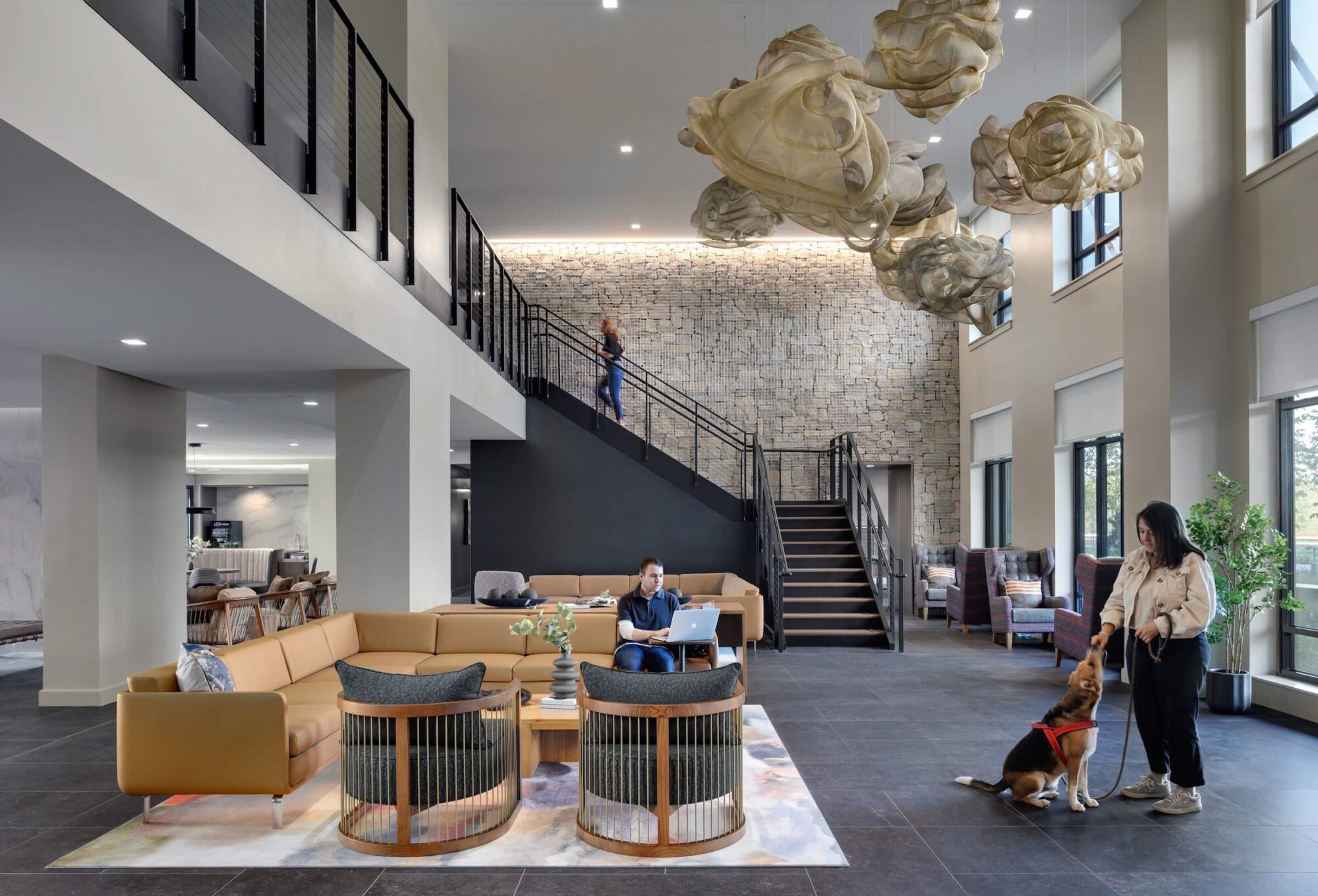
Atwood’s two-story foyer features a grand staircase with a gabion wall behind.