
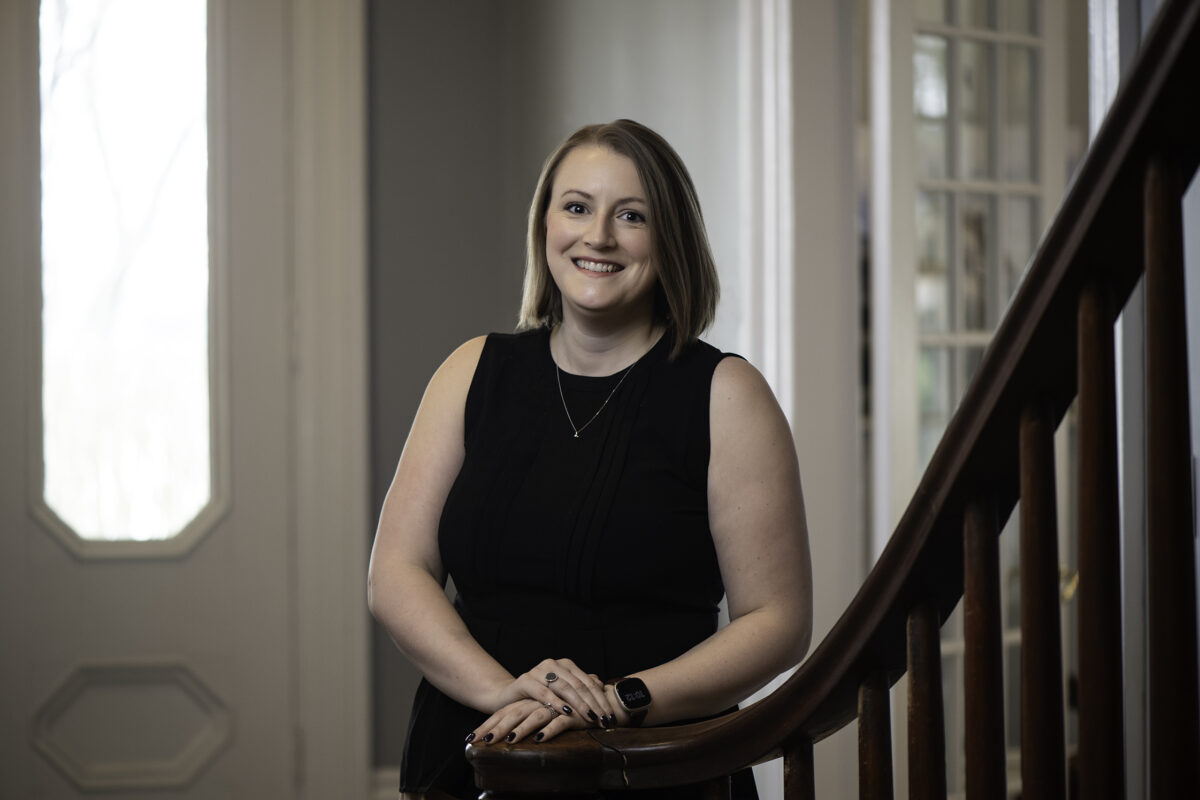
Liz Peabody on Mentorship, Multifamily Design, and Building Inclusive Communities
By Lindsay Lewis
As part of International Women’s Day in Design, Building Enclosure sat down with TAT Associate Liz Peabody. They spoke about topics such as what inspired Liz to start her career, balancing artistry versus the business demands of architecture, and how diversity and inclusion lead to stronger design.
What initially inspired you to pursue a career in architecture, and who or what influenced you most along the way?
My father is not a trained engineer or architect, but he designed the house we grew up in. He and my grandfather helped build it. I knew this as a child, and that knowledge made architecture seem like something that was completely achievable. As cliché as it may sound, there was never a moment in my household where there was an ounce of doubt that I or my brothers could be literally anything we set our minds to. Between that confidence, my love of the arts, and desire to leave a lasting impact with my work, I knew architecture was the right fit for me.
Can you share a project you’re especially proud of and explain what made it meaningful—either professionally or personally?
When I first entered this field I thought I would focus on single-family residential projects, but I’ve found myself drawn to working at a larger scale. Being a part of mixed-use developments and innovative multifamily projects has helped me realize that I find the greatest sense of pride in addressing the biggest challenges.
My most rewarding project to date has been Alexan Harrison, a two-building, 450-unit development in Westchester County outside of New York City. With structured parking, multiple finish schemes and intricate construction detailing, this was by far the largest and most challenging project I’ve worked on at TAT. At the same time, it was a very collaborative endeavor with the client and the broader design team, and by working well together we were able to think creatively and deliver a community that outperformed everyone’s expectations.
For me, the excitement of problem-solving is what makes this work interesting, and it’s what keeps projects that might look similar from the outside, or have the same underlying construction type, from becoming monotonous. Every project has unique challenges to figure out, and solving these puzzles is what keeps me driven to do more.
Continue reading the Q & A here.